
Frequently Asked Questions
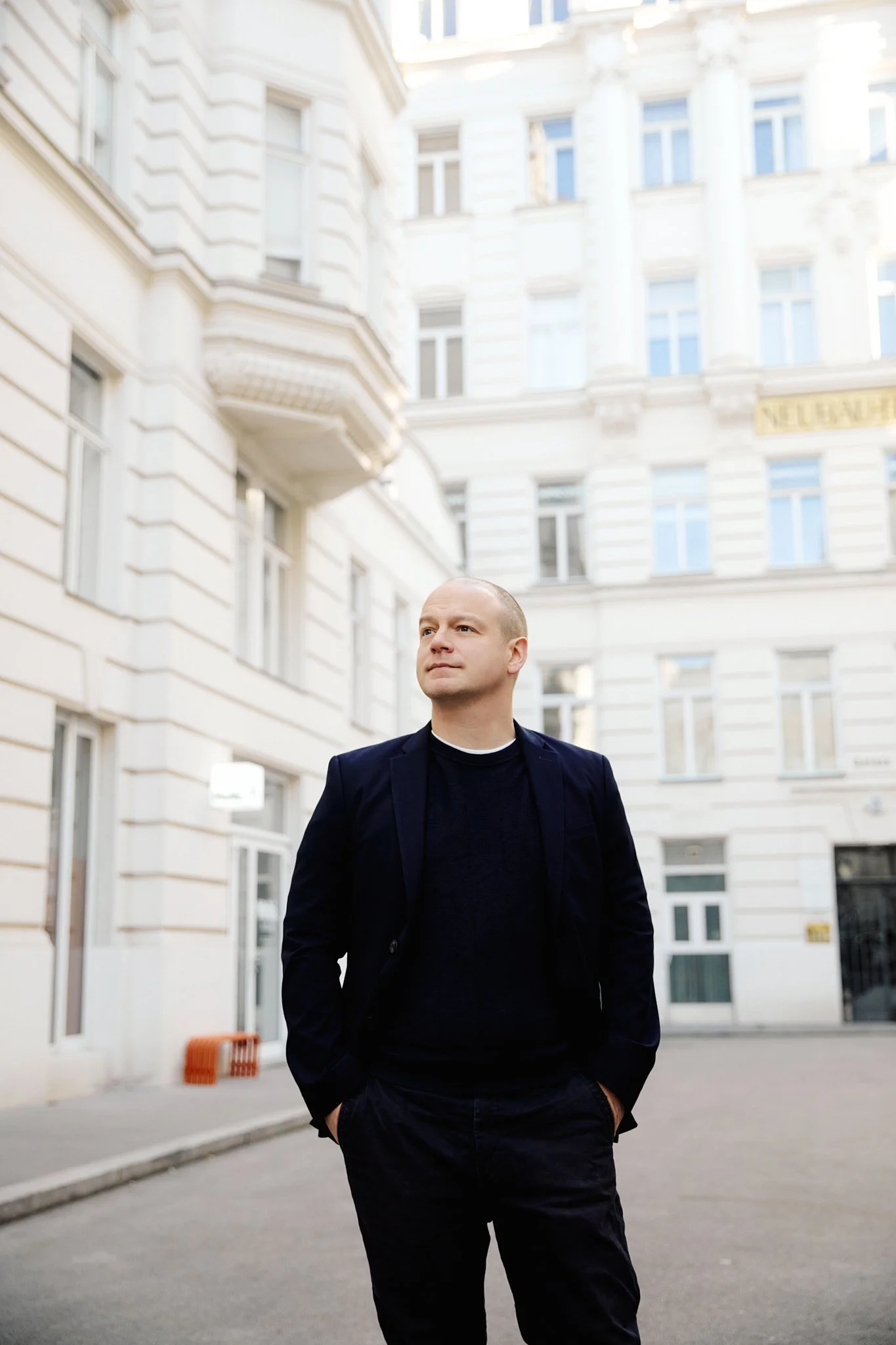
Evert Vastenburg is an Austrian attorney-at-law based in Vienna.
On this page you will find answers to frequently asked questions about legal proceedings in Austria:
About my services
Civil proceedings
Criminal proceedings
Language and support
About my services
1. Can I receive legal assistance in Dutch or English?
All of my services can be provided entirely in Dutch or English.
2. Are you a qualified lawyer in Austria?
Yes – I am registered as an attorney-at-law (Rechtsanwalt) with the Vienna Bar Association (Rechtsanwaltskammer Wien). I am authorized to practice throughout Austria. Further information about my education and background can be found here.
3. Do you work throughout Austria?
In general, I work throughout Austria. This also applies to criminal matters, provided the person concerned is not in custody. If the person concerned is in custody, representation is in any case possible in Vienna, Korneuburg, St. Pölten, Linz, Wels, Krems an der Donau, Wiener Neustadt, Eisenstadt, and by individual agreement in other locations.
4. Can I receive advice online or by phone, or do I need to come to Austria?
Consultations are available by appointment online, by phone, and of course in person at my office in Vienna. Further information about how to get in touch and the location of my office can be found here. Personal (physical) presence in Austria is only required for hearings to which you are summoned.
5. What are your fees?
An initial consultation currently costs EUR 200 (incl. VAT). My further fees depend on the specific matter. Relevant factors include whether it concerns civil law, criminal law, or something else, the complexity of the case, the work to be carried out, and the importance of the matter to those involved. Further information about the different billing arrangements can be found here.
6. Do you work with other lawyers?
I am part of a shared office of five attorneys who each run their own independent practice. Since we partly specialize in different areas of law, we are able to support one another on a regular basis. If I believe that a colleague is better placed to assist you with a particular matter, I will refer you to that person. Support from multiple lawyers is possible where this is warranted. Further information about my colleagues can be found here.
Civil proceedings
1. Do I need to respond to a claim served against me in Austria?
Yes! If you simply ignore a claim or a payment order (Zahlungsbefehl), you will in most cases suffer serious consequences.
If the defendant fails to appear at a civil hearing or does not respond appropriately to a claim, a default judgment (Versäumungsurteil) may be rendered against them in many cases.
The options to subsequently challenge such a judgment are very limited. Some chance of success exists, for example, only if you did not receive the original claim or were unable to respond in time due to an unexpected event for which you bear no responsibility.
Similarly, no objection can be raised against payment orders once the prescribed deadline has passed.
2. What is the effect of a civil judgment in Austria?
A civil judgment in Austria can be used to enforce a claim against the other party in other countries. Once this is done, there is in principle no longer any possibility of challenging the validity of the claim ("this is not justified because the product was defective", etc.). It is therefore important to contest claims already in the initial proceedings.
Further information on civil law topics can be found here:
Criminal proceedings
1. What should I do if I am summoned to a police interrogation?
If you are summoned to a police interview as a suspect, it is important to contact a lawyer as quickly as possible. The first statement one makes is often of great significance for the subsequent proceedings. Going to an interrogation without proper preparation can seriously prejudice your position in the case. If you have now received a summons to a police interrogation, you can contact me at office@vastenburg.at or on 0043 6804446590.
2. Do I have to appear at a criminal hearing in Austria?
Yes! If you fail to appear at a criminal hearing in Austria despite being summoned as a defendant, you run – particularly in more serious cases – the risk of an arrest warrant being issued. This often results in an unnecessary loss of time, money, and a completely avoidable period of pre-trial detention.
Under certain conditions, it is possible to send a representative or file a written statement in minor cases. Furthermore, where there is a legitimate excuse, a postponement of the hearing may be possible. Work is in principle not accepted as a valid reason. Which options are available in your specific situation must be assessed on a case-by-case basis.
Further general information about Austrian criminal proceedings can be found here.
3. What sentence can I expect if convicted?
The official indictment always states precisely what you are charged with and under which provision of the Austrian Criminal Code the prosecution considers you should be punished. This provision sets out the maximum sentence and – for more serious offences – the minimum sentence.
A conviction does not automatically mean that you will receive the sentence provided for in the relevant provision. The sentence is often lower and/or partially suspended. This depends above all on your statement (whether or not you admit guilt), your personal background, and the many factors surrounding the offence with which you are charged. For a “repeat offender”, the sentence may in some cases even exceed the prescribed maximum. For all these reasons, it is strongly advisable to prepare carefully for a hearing. A poor performance during a criminal trial can have far-reaching consequences.
In the case of minor offences, a so-called diversionary measure (Diversion) may also be possible under certain circumstances. This is advantageous as it does not count as a criminal conviction.
Further information on the penalties for specific categories of offence can be found here:
Battery (physically attacking someone)
4. What are the consequences of a criminal conviction in Austria?
A criminal conviction in Austria can have serious consequences for the person convicted. Beyond the risk of a prison sentence, there is the possibility that one may – in addition to the sentence – be required to pay substantial sums to compensate people damaged by the criminal offence, or to the state, for example where these sums are classified as proceeds generated by the offence. There is also the possibility of receiving a ban on entering Austria for a number of years, and a conviction can make it very difficult to practice certain professions in Austria. In addition, an Austrian conviction may also be relevant in foreign proceedings. Particularly within Europe, it is relatively straightforward to establish what a person has on their criminal record in another European country. This can serve as an aggravating circumstance in other countries, just as a foreign criminal record can be highly relevant in Austria.
5. What can I do if I disagree with an indictment?
The criminal hearing exist precisely to give you the opportunity to defend yourself against any charges brought in an indictment. If you receive an indictment, it should therefore not be understood as a "conviction". In short: the court has not yet ruled on your guilt or innocence at that stage.
6. What should I be aware of if I am being extradited to Austria?
It is advisable to contact a lawyer in Austria well in advance of your extradition. Foreign courts and lawyers in these proceedings regularly have only very rudimentary information at their disposal. An Austrian lawyer can obtain the case file in order to inform you thoroughly. In rare cases, an intervention in Austria itself can even halt your extradition.
7. What should I do if I am a victim of a criminal offence in Austria?
Victims of a criminal offence are likewise required to comply with a summons to appear at a criminal hearing or a witness interrogation in order to give testimony. Throughout the proceedings, victims also have certain rights, such as the right to inspect the case file, to be represented, and to submit evidence.
Further information on victims’ rights in Austrian criminal proceedings can be found here.
Language and support
1. Do I need an interpreter?
If you do not speak sufficient German to participate in a hearing, you must be assisted by an interpreter. The importance of an interpreter should not be underestimated, just as one’s own command of the German language should not be overestimated.
Only persons who hold the appropriate certification for this purpose in Austria may act as interpreters. Friends or family are therefore not suitable. Equally, a lawyer cannot fulfil this role by virtue of their function.
The remuneration of an interpreter is regulated by law. This can – if a hearing is lengthy and the interpreter must travel from another city, for example – be considerable. In civil proceedings, the interpreter is paid by the parties. In criminal proceedings, it is the state that bears the costs, although it may recover these (at least in part) from those involved.
2. What can I do if I cannot afford a lawyer?
For people with limited financial means, Austria offers what is known as Verfahrenshilfe (legal aid). This assistance can be comprehensive: one may, among other things, be exempted from paying court fees, be appointed a lawyer, etc.
It is important to note that the assistance is necessary for the proceedings. This means that a lawyer is normally only appointed where this is required by law or deemed highly necessary. A lawyer is required by law in Austria, among other situations, where the value of a dispute exceeds EUR 5,000 or where the person concerned is in custody.
If Verfahrenshilfe is granted, one is appointed a lawyer from the federal state in which the proceedings are taking or would be taking place. One cannot choose one’s own lawyer.
Please note: Verfahrenshilfe does not mean that proceedings become "free of charge". After a number of years it may be assessed whether the person concerned is then in a position to cover the costs incurred after all. Anyone who loses a civil case must pay not only the amount claimed but also the other party’s legal costs.
Further questions and support
If you have further questions or are in need of support, feel free to contact me via office@vastenburg.at or by phone via 0043 6804446590, or use the form below.
Send an inquiry